



Craft Map
The Craft Map
One craft across several Yoruba towns, with a clear historic centre and a clear modern split between natural and synthetic dyeing. The identifying facts are the town, the two specialists, the resist method and the dye.
Abeokuta
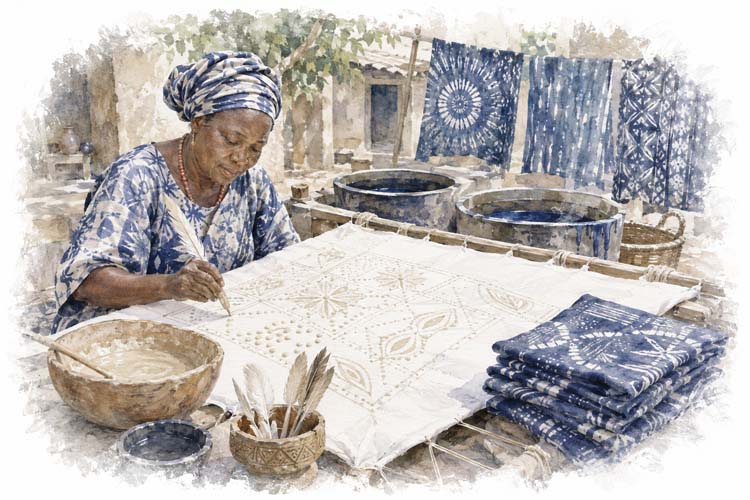
North of Lagos, Abeokuta is where adire in its recognised form originated in the nineteenth century, developing on imported cotton shirting that took starch resist better than local strip cloth. Its dyeing compounds are the historic and continuing centre of natural indigo work. A record should name the aladire who drew the resist and the alaro who dyed it, because they are usually different women and the market habitually credits neither of them.
Ibadan and Oshogbo
The craft spread early to Ibadan, and Oshogbo carries a distinct significance through the arts centre where traditional adire technique has been deliberately taught to a younger generation. Between them these towns hold most of what remains of the natural-indigo practice. Lagos, by contrast, is where the cloth is sold and where the highest proportion of synthetic and printed imitation circulates.
Lagos and the Selling Floor
Lagos holds the largest market for the cloth and almost none of the making, and it is where the gap between the two versions of adire is widest. Both hand-resisted natural-indigo work and printed imitation are offered under the same name and frequently by the same seller, so the questions that matter here are where it was dyed and by whom, and a seller who cannot answer either is trading rather than representing.
Also on the Map
The indigo plant, grown and processed into cakes and traded across West Africa long before this tradition existed, and the pit itself, which is a maintained living vat rather than a container of dye and is the piece of equipment the whole craft depends on. The imported cotton shirting of the nineteenth-century trade, without which the starch-resist tradition would not have taken this form. And the printed wax-print industry, which is on this map because it took most of the market. Which town, and then natural or synthetic: on this map the second answer separates two quite different objects sold under one name.