





Craft Map
The Craft Map
Xiang embroidery is a city craft with a provincial hinterland, so its map is shorter than most and its anchor is unusually precise: the craft, its evidence and its institutions all sit in and around Changsha. Hunan embroidery entered the first national intangible cultural heritage list in 2006, and what that listing recognises is a practice tied to this valley rather than a technique available anywhere.
Changsha: Xiang Embroidery
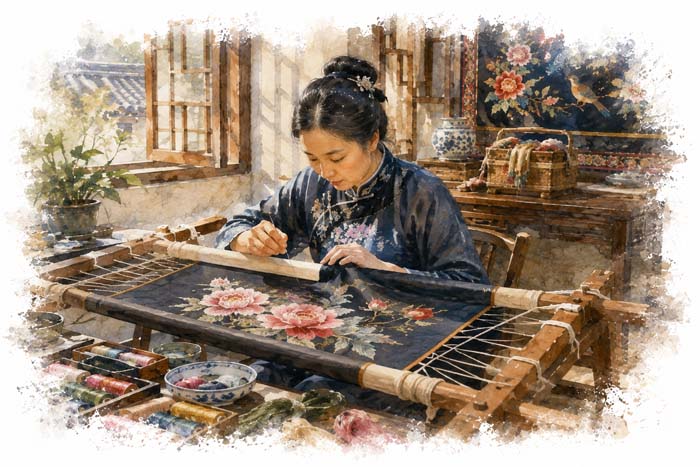
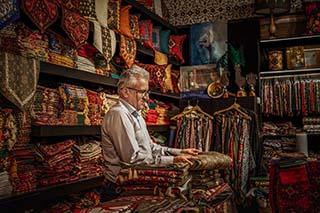
On the Xiang river, the provincial capital is where the workshops, the training and the trade have concentrated for as long as there are records of it. Embroidery here is studio work rather than village work, done at large frames by people who have trained for years in tonal sorting and directional stitching before being trusted with a face or a coat. The city also holds the craft's own archaeology, which no other embroidery centre in China can say. A Xiang piece's record should name the workshop and, for anything of quality, the embroiderer.
Mawangdui: The Evidence
On the eastern side of Changsha, the Mawangdui tombs yielded forty embroidered garments from Tomb No. 1 in 1972, of the Western Han and roughly 2,100 years old, worked by methods close to those still used. This is not a production site and it never was. It is included on this map because it is the only place in the world where the ancestry of a living embroidery tradition can be inspected directly, and because any serious claim about the age of Xiang work rests here rather than on tradition.
The Xiang and Dongting Country: The Hinterland
North and around the capital, the lake and river districts of Hunan supplied the silk, the labour and the domestic demand that sustained the craft between elite commissions. Work in these districts has historically been less specialised than in the city and more closely tied to household use, and pieces from the wider province are correspondingly plainer. That is a difference of purpose rather than of skill, and a record that names a district rather than a city workshop should be read accordingly.
Also on the Map
The Xiang river itself, which gave the craft its name and carried its trade. Dongting Lake, the water that shaped the province's economy. And the provincial museum's textile galleries, where any claim about Han-period technique has to be checked. Hunan allows an unusual test, because a piece can be compared directly with the oldest surviving example of its own tradition.