









Craft Map
The Craft Map
Woodcraft on this coast is anchored to buildings, so it belongs where those buildings stand and where the families who maintain them still live. One mark applies here, and it attaches to the material rather than to the object: Nilambur teak has held Geographical Indication protection since 2017, the first forest wood product in the world to be granted it.
Thrissur: The Temple Carpentry
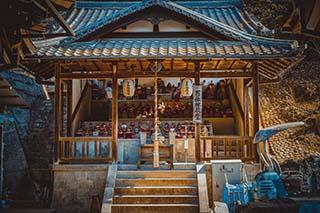
At the centre of the town stands Vadakkumnathan, raised in wood and stone, holding one of the finest koothambalams on the coast and surrounded by the ground on which Thrissur Pooram has been staged since 1796. The carpentry and carving families of the surrounding countryside have serviced these structures continuously, which is why the trade concentrated here rather than in the ports. Thrissur is the anchor a visitor can reach and work outward from. The yards themselves are in the villages around it, and the timber stacked in them has usually been waiting for years.
Irinjalakuda and Cheruthuruthy: The Theatre Towns
South of Thrissur, Koodalmanikyam at Irinjalakuda holds a koothambalam of the first rank. North of it, at Cheruthuruthy on the Bharathapuzha, Kerala Kalamandalam maintains another inside its campus and trains the performers who use it. These two places are where the relationship between the carpenter and the art form is easiest to see, because in both the building is still doing the job it was framed for. Koodiyattam, the art in question, was proclaimed a UNESCO Masterpiece in 2001.
Aranmula: The Metal Mirror
Inland on the Pamba in Pathanamthitta district, Aranmula is where the kannadi is cast and polished, by a handful of Vishwakarma families descended from casters the Parthasarathy temple brought from Tirunelveli. Production is measured in a few pieces at a time and the alloy is a family secret. Aranmula Kannadi took Geographical Indication protection in 2005, the first Kerala product to hold one, which makes this the only craft on the coast whose claim can be checked against a register.
Beypore: The Uru
At the mouth of the Chaliyar near Kozhikode, Beypore has built wooden ships for around two thousand years and has been a port of record since the first century. An uru is assembled on the open strand, entirely by hand, over one to four years. A Geographical Indication was sought for the Beypore uru in December 2022 and has not been granted, so provenance here rests on the yard and the master shipwright rather than on a mark. The hulls stay visible from the shore for most of their construction.
Also on the Map
Nilambur, where Conolly's Plot has grown since 1846 as the oldest teak plantation in the world. Guruvayur, whose Sreekrishna temple holds another koothambalam. And Kochi, the port through which this coast's work has left it for two millennia. A record here should name the building, vessel or temple a piece served; these crafts were rarely made to stand alone.