








Craft Map
The Craft Map
Kyushu's porcelain country is a small area with a confusing nomenclature, and getting the names right is the single most useful thing a record can do. The distinction that matters most is between where a piece was made and where it was shipped from, because the world has spent four centuries conflating the two.
Arita: The Kilns
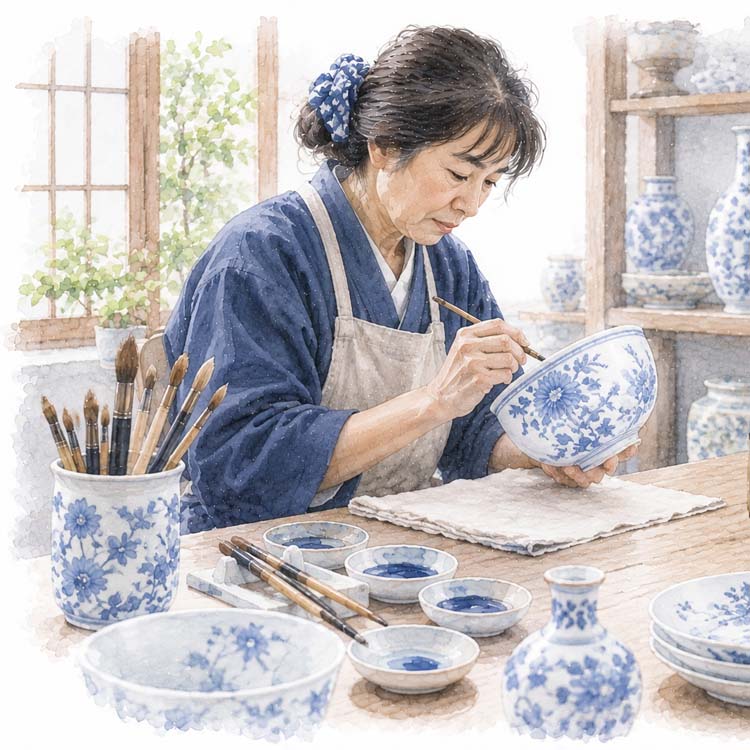
In Saga prefecture, in hill country inland from the coast, Arita is where the porcelain is actually made and has been since 1616. The kilns, the decorating workshops and the technical lineage are all here, and the town's scale is domestic rather than industrial, with workshops occupying ordinary buildings along a few main streets. A record naming Arita is naming the place of manufacture, which is the fact a collector actually needs.
Izumiyama: The Material
Just outside the town lies the quarry where kaolin was identified in 1616, and where it was worked for centuries afterwards. It is a hillside with a large piece missing. This is not a workshop and never was, but it belongs on the map because Japanese porcelain has a single point of origin and this is it, and because the physical scale of the excavation is the clearest available measure of what four hundred years of production actually consumed.
Imari: The Name
On the coast a short distance away, Imari is the port from which Arita's wares were shipped, and the name Europe attached to the porcelain. The name is commercial only. A record naming Imari is, strictly, naming a harbour, and where the term is used it should be understood as a style designation and a historical trade name rather than as a statement about where anything was made.
Also on the Map
Okawachiyama, the secluded valley where the domain's official kilns worked under restriction and where the finest unsold grade was produced. Hasami and the neighbouring Nagasaki kiln towns, which supplied volume alongside Arita and are frequently confused with it. And the Dutch trading post at Nagasaki, through which the entire export trade passed. Kiln first, grade second. Nothing about this country's ware is settled before both are known.