















Craft Map
The Craft Map
Hereke is a single-factory tradition with a founding date, which makes its map the shortest in this collection and its provenance questions unusually clear. There is no Geographical Indication here; provenance rests on the workshop, the period and, above all, the measurable density.
Hereke: The Imperial Works
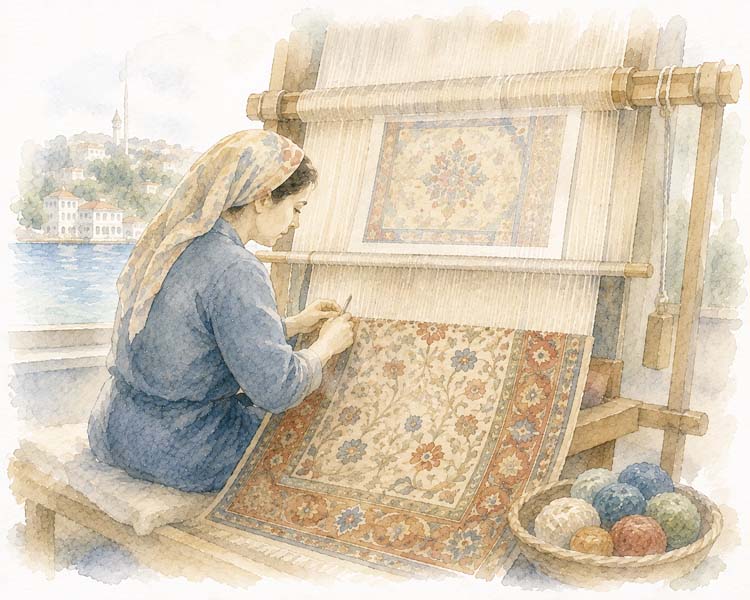
On the Sea of Marmara east of Istanbul, in Kocaeli province, the town holds the factory Sultan Abdülmecid I founded in 1843 and the workshops that descend from it. Everything about the place is industrial in origin rather than vernacular: there was no earlier local carpet culture of consequence, and the skills were brought in. A record naming Hereke should also name a period, because imperial-era and modern production are different bodies of work made for different clients.
The Looms: Where Density Is Decided
In this tradition the meaningful unit is the loom and the warp set up on it, because the fineness of the warp fixes the maximum achievable knot count before a single knot is tied. Everything else follows from that setup. Any record able to state the knot density is offering the most useful provenance this craft admits of, and it is a claim that can be independently checked.
Istanbul: The Client
The palaces are where these carpets were destined and where many of the finest remain, and the court supplied the taste the designs answer. As with the kilns, the design authority and the manufacture sat in different places. A collector reading an imperial-period Hereke is reading Ottoman court taste executed at Hereke, not Hereke's own invention.
Also on the Map
Kayseri and the other Turkish silk weaving centres, which produce fine work that is regularly offered under Hereke's name and is not the same thing. The European and international collections holding diplomatic gifts, which is why so many of the best pieces are unavailable. And the Persian weaving centres whose designs later Hereke production sometimes draws on. Period, workshop, knot count. A Hereke record that omits any of the three is incomplete.