








Craft Map
The Craft Map
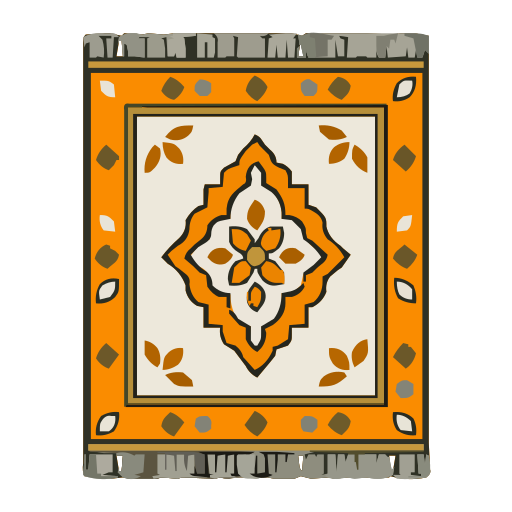
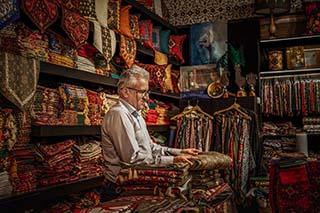
This heartland is a set of cities rather than a district, and the city is the unit of attribution. The golden mapping records Persian Hand-Knotted Carpet against Tabriz, Kashan, Kerman and Qom, and a carpet described only as Persian has withheld the one fact that matters most.
Tabriz: The Symmetrical Knot
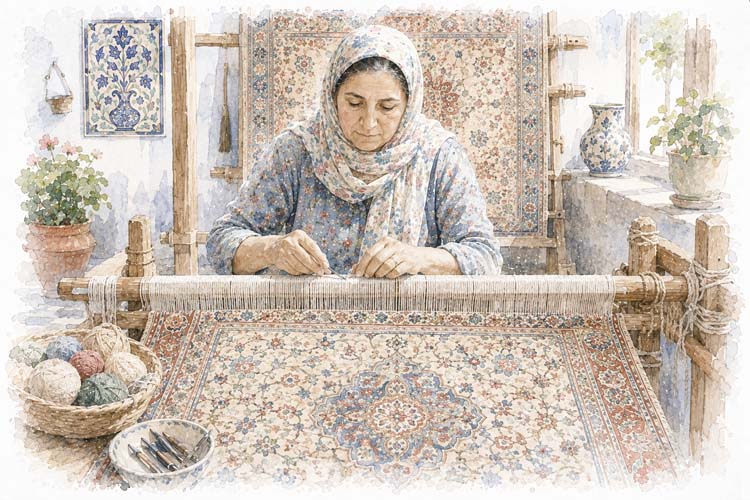
In East Azerbaijan in the northwest, Tabriz is the oldest and most technically distinct of the schools, working with the symmetrical knot in a country that otherwise favours the asymmetrical one, and producing carpets known for durability and for precise medallion drawing. The city also carries the miniature painting tradition in this mapping. Its covered bazaar remains the commercial centre of the northwestern trade. A record naming Tabriz is making a claim that can be checked from the reverse.
Kashan: The Medallion and the Tile
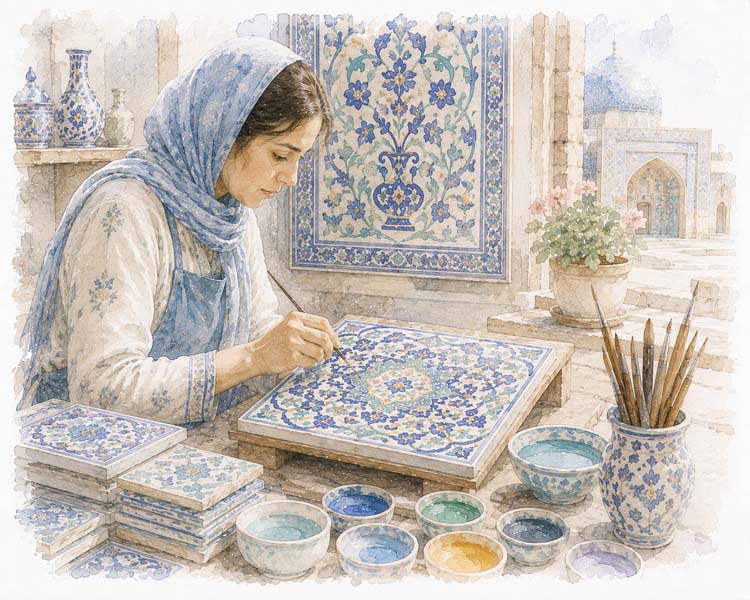
In central Iran, Kashan gave its name to kashi, the glazed tile, and to a carpet layout of central medallion on a floral field that spread across the whole tradition. Fine wool and silk work, high densities, and a compositional formula so widely imitated that the name is used loosely. Where a piece is offered as Kashan, ask whether the attribution is to the city or to the layout, because the two are routinely confused and only one of them is provenance.
Kerman and Qom: Colour and Silk
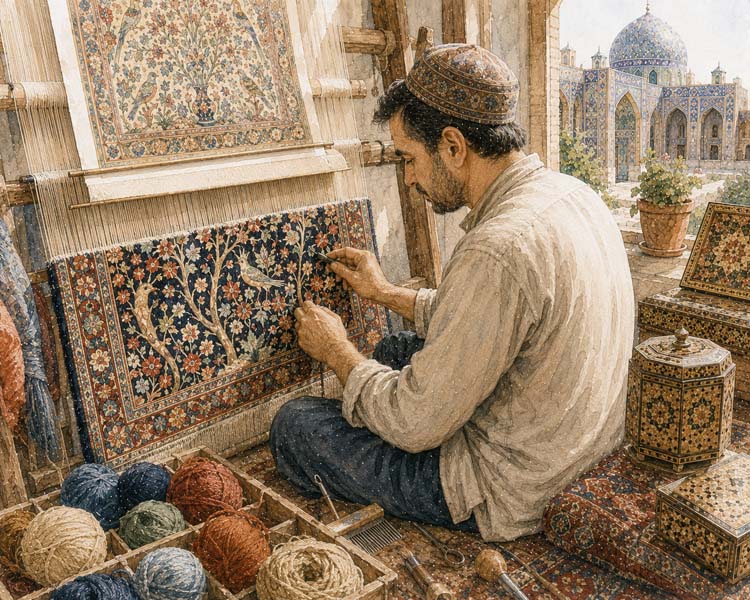
Kerman in the southeast is the colourist school, with soft wool, vivid dyes and elaborate pictorial fields. Qom in the centre is the youngest, a twentieth-century school that went straight to silk at very high knot counts and stayed there. They sit together on this map because they mark the two ends of the range, one exuberant and woollen, the other restrained in scale and extravagant in material.
Also on the Map
The dye yards on the edges of each city, which are where the palettes that identify a school are actually made. The wool sources, since a Kerman fleece and a Tabriz fleece do not behave alike. And the export houses, which turned four town names into trade designations. Turn a Persian carpet over: the back names the city.