







Craft Map
The Craft Map
Bizen is a single-town tradition with a very tight geography, so its map is short and its distinctions are internal: kilns, clay sources and firing types rather than separate settlements. Bizen is the oldest of the Six Ancient Kilns, a grouping designated a Japan Heritage in 2017, and that designation attaches to the continuity of the tradition rather than to any individual maker.
Imbe: Bizen Ware
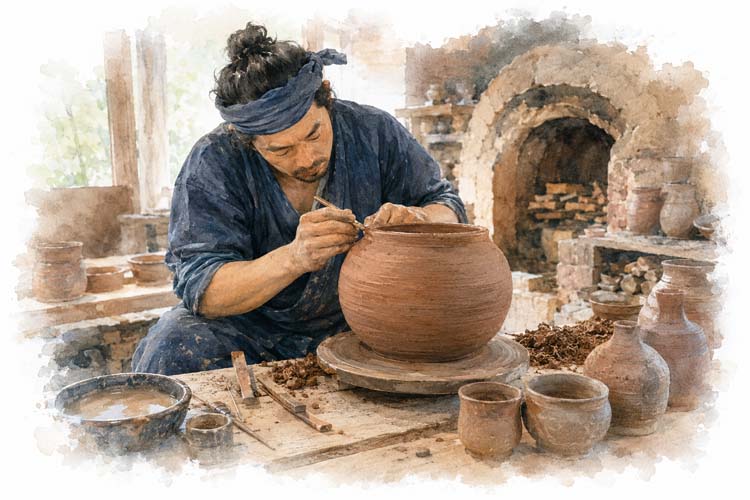
The ware is Bizen-yaki. In Bizen City, Okayama prefecture, the Imbe district is the production centre and has been for close to a thousand years. The town is small, the kilns are within it, and the clay comes from the surrounding paddy subsoil. Family kilns dominate, and lineages are long. A record naming Imbe is naming the place where a piece was actually formed and fired, and in this tradition it should also name the potter, because with no decoration to identify a workshop the maker's forms and firing habits are the identity.
The Clay Beds: The Material
The iron-rich clay dug from beneath the rice fields around the town is what makes the tradition possible, and it is not interchangeable with clay from anywhere else. It is aged before use, in some workshops for years. This belongs on the map because a Bizen pot is a local geological product to a degree that few ceramics are, and because the refusal to glaze only makes sense given a body that rewards being left alone.
The Kilns Themselves: Where the Surface Is Made
In this tradition the chamber is where the decisive work happens, and the differences between a large communal climbing kiln and a smaller single-chamber kiln are legible in the results. Position within the chamber matters as much as the kiln itself. Any record of a Bizen piece that can state the firing and the position is offering the most specific provenance this craft admits of.
Also on the Map
The pine forests that fuel the firings, without which none of the surface effects exist. The other five ancient kilns, Shigaraki, Tamba, Echizen, Seto and Tokoname, which share the Japan Heritage designation and are frequently compared with Bizen and confused with it. And the tea schools, whose judgement made this ware collectable in the first place. Which fire, and where in it. Bizen admits no more specific answer than that.