



Craft Map
The Craft Map
Sumatra's weaving divides north from south, and a record that says only Sumatra has left out the distinction that matters most. The two traditions here are recorded separately in the golden mapping, Batak Ulos to North Sumatra and Songket to the Minangkabau and Palembang country, and they should never be conflated.
The Toba Highlands: The Ulos
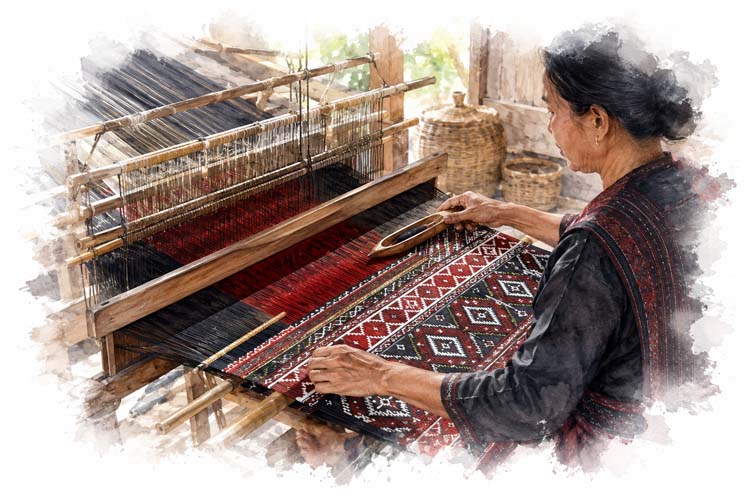
Around Lake Toba in North Sumatra, the Batak weaving villages produce ulos on backstrap looms, in named types tied to specific ceremonial uses. This is household weaving embedded in a kinship system rather than a workshop industry, and the weavers are women working at home. A record naming North Sumatra should also name the type of ulos, because the type carries more information about a piece than the village does.
Palembang: The Court Songket
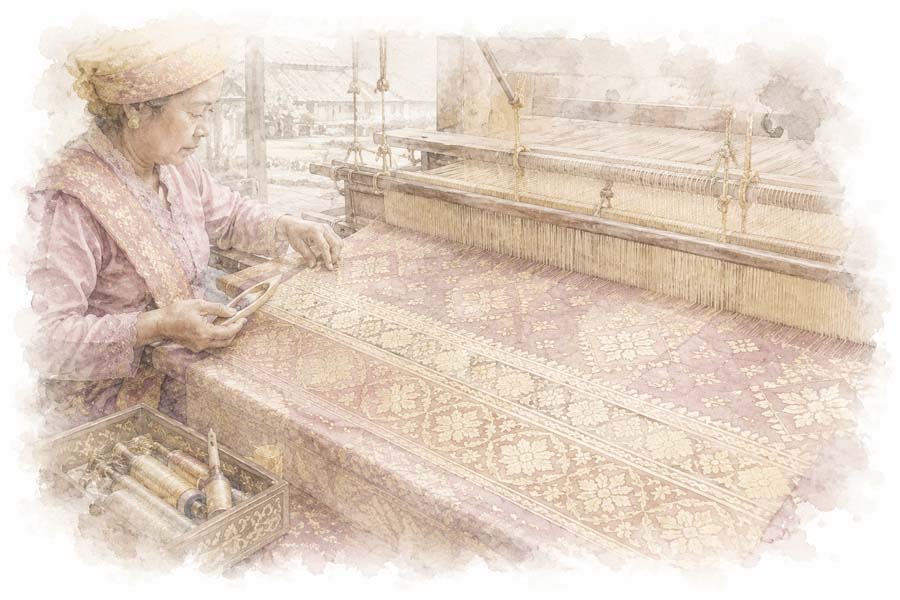
In South Sumatra, Palembang is the city most closely associated with songket and with the Srivijaya maritime empire whose wealth underwrote it. The city's work is the reference point for the tradition's courtly end. Because Palembang is also a trading centre, a piece attributed to it may have been woven in its hinterland, and the distinction between where a songket was made and where it was sold matters here as it does in every trading city in this collection.
Pandai Sikek and the Minangkabau Valleys
In West Sumatra, the Minangkabau highland villages, Pandai Sikek foremost among them, weave songket with a characteristic dark ground and motifs drawn from local plant forms. This is village weaving rather than court weaving, and its aesthetic is correspondingly harder-edged. Where a songket shows a black ground and fern-derived figures, the Minangkabau country is the first place to look.
Also on the Map
Lake Toba itself, the geographic and cultural centre of the Batak world. The morinda and indigo sources that supply the older ulos palettes. And the gold and silver thread trade, an import on which the entire songket tradition depends and which has always come from outside Sumatra. North or south comes first here; whose ceremony a cloth was made for comes second.