





Craft Map
The Craft Map
One range, two crafts, divided north to south. Both are sold internationally as Berber work and both are made by Amazigh hands; the second term is the one the makers use. Wool and women in the high central mountains; silver and men in the south. Four locations carry the work.
Middle Atlas
The cold plateau country around Khenifra, Azrou and the Beni Ouarain districts, and the source of the heavy deep-pile rugs made for warmth: undyed cream grounds with dark linear geometry in the best known type, and shaggy monochrome pieces elsewhere. Woven at home by women on upright looms without a drawn design. A record from here should name the weaver and her village and state whether the wool is handspun, because that single fact separates a village rug from a workshop copy of one.
High Atlas
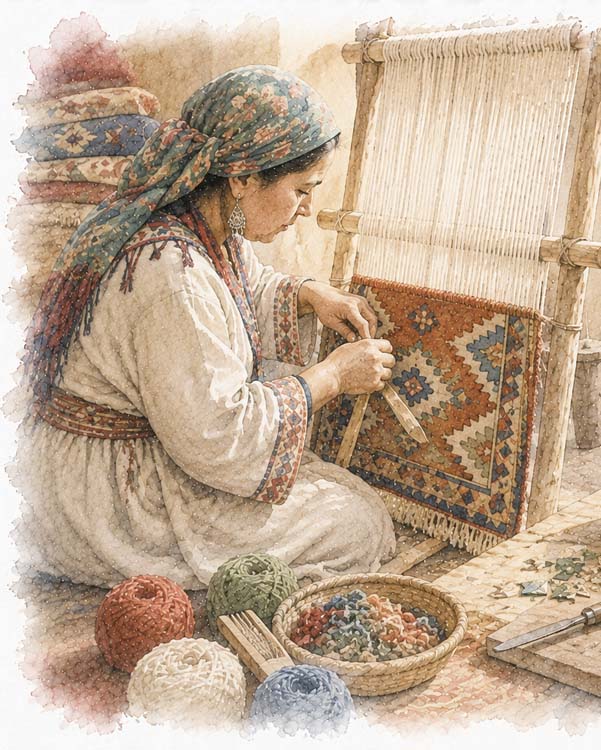
The valleys reached from Marrakesh, warmer and lower in places than the Middle Atlas and weaving accordingly: more colour, more flatweave, and mixed-structure pieces that run knotted pile, flatweave bands and raised loops in a single rug. The design vocabulary is denser and more varied. These are the rugs in which the improvised composition is most obvious, and a record should note the structure sequence, since it is the piece's actual description.
Anti-Atlas
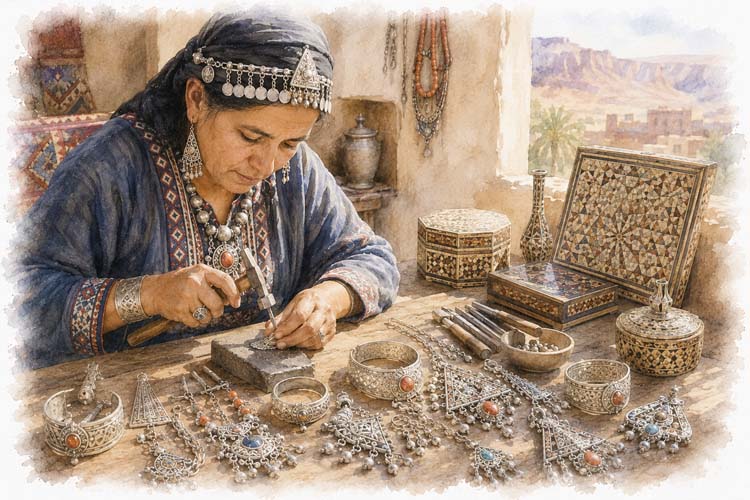
The dry southern range, and the historic ground of Amazigh silver: triangular fibulae worn in pairs, heavy pectorals, engraved and enamelled work set with amber and coral. The craft was substantially in the hands of Jewish silversmiths until the mid-twentieth century emigration, which broke much of the transmission. A record should state weight, alloy, and whether the piece is old, new, or a modern cast taken from an old model.
Souss
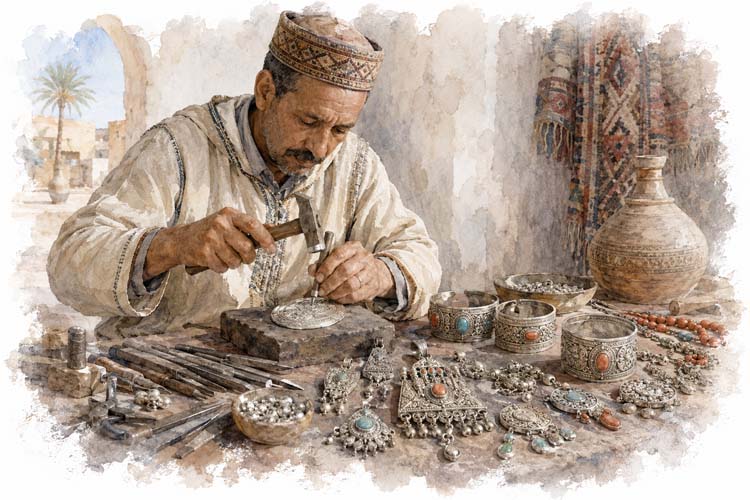
The plain below the Anti-Atlas, with Tiznit as its silver town and the trading point for the whole southern craft. Work here ranges from serious hand-raised and chased pieces to a large volume of repetitive production for the visitor trade, and the two sit side by side in the same streets. The question to ask is who worked it and by what method, and a shop that answers with a region rather than a name is selling stock.
Also on the Map
The flocks themselves, since the wool's staple and lanolin are why these rugs wear the way they do. The weekly rural markets, which were the trading system before dealers and still are in the mountains. And the melting pot, literally: a great deal of old Amazigh silver was sold by weight and destroyed when households needed cash, which is why the surviving old pieces are fewer than the trade suggests. Village, maker, structure, and for silver the weight: those four answers are the whole of it.