










Craft Map
The Craft Map
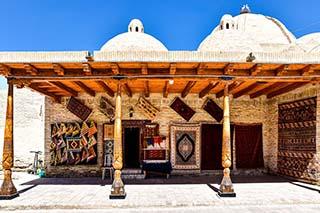
Kilim weaving covers the whole Anatolian plateau, so the map is a matter of regions and villages rather than of a single centre, and regional attribution is the entire game. There is no Geographical Indication and there cannot usefully be one; provenance here rests on regional convention, structure, dye and format.
Konya and Its Villages: The Central Plateau
Konya sits at the centre of the plateau and its surrounding villages produced the kilims most people picture when the word is used: bold, large-scale, high-contrast, with elibelinde figures and strong geometric fields. This is pastoral country and the weaving belongs to it. A record naming Konya is naming a broad regional family rather than a workshop, and where a village can be named it should be, because the differences between villages are real and legible.
Kayseri and the Eastern Plateau
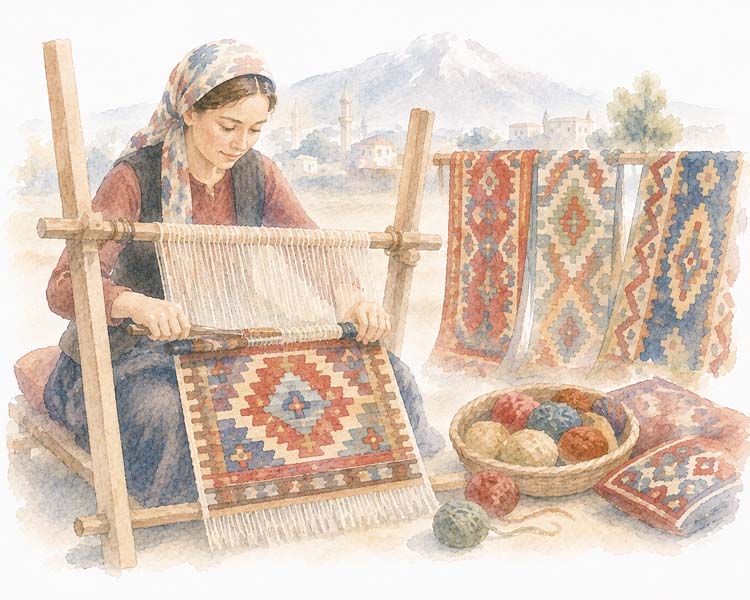
East and north, Kayseri anchors a second body of weaving with its own conventions, and the town has long been a trading centre for textiles from a wide hinterland as well as a producer. That dual role is a caution for collectors: a kilim attributed to Kayseri may have been woven a considerable distance away and sold there. The distinction between where a piece was made and where it was traded matters here as much as it does anywhere in this collection.
The Nomadic and Semi-Nomadic Groups
Among a mobile people the craft cannot belong to a settlement at all. Some of the finest plateau weaving comes from Yörük and other pastoral communities whose textiles are attributed by group and convention rather than by place, and whose formats, bags, tent bands, salt bags and animal trappings, are functional types that settled weaving does not produce. Where a piece is one of these formats, the format itself is provenance.
Bergama: The Western Weaving
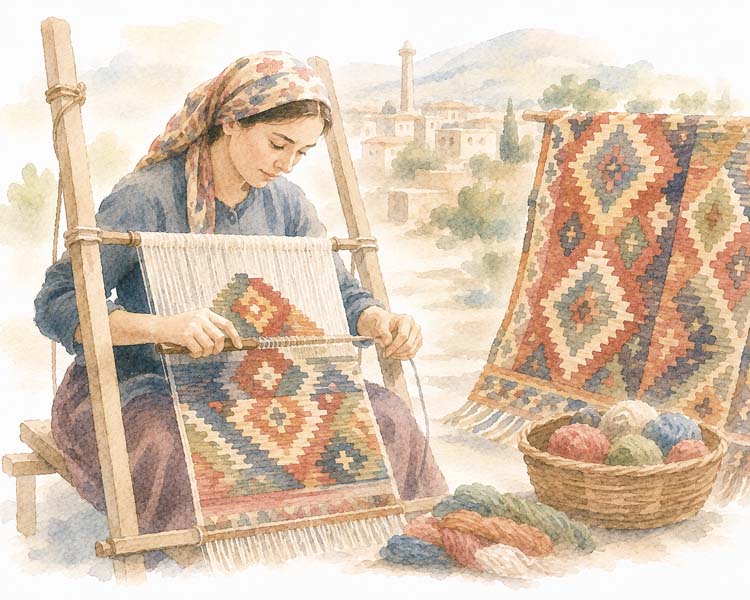
Bergama sits in Izmir province near the Aegean, on the site of ancient Pergamon, which places it west of the plateau proper and stretches this heartland's name a little; saying so is more honest than pretending otherwise. Weaving in the district runs back to roughly the eleventh century, in pile and flatweave alike. The palette is the identifier: deep madder red, indigo, undyed white and a little green, carried on thick wool and a robust structure, with bold coarse geometry and a comb or paired hand motif often standing in the centre field. This is a different visual family from Konya's, and a record saying only Anatolian kilim has flattened two traditions that do not look alike.
Also on the Map
The dye plants of the plateau, madder above all, whose availability shaped regional palettes. The wedding customs that were the craft's only reason for existing. And Istanbul's carpet trade, the funnel through which almost all of this material reached the world. With kilims, ask the village and the group, and be ready for the answer that nobody now knows.