



Craft Map
The Craft Map
One coast, one material, and a set of questions about substance rather than authorship. The questions are the maker, gathered or mined, treated or natural, and whether it is amber at all.
Baltic coast (Palanga, Klaipėda)
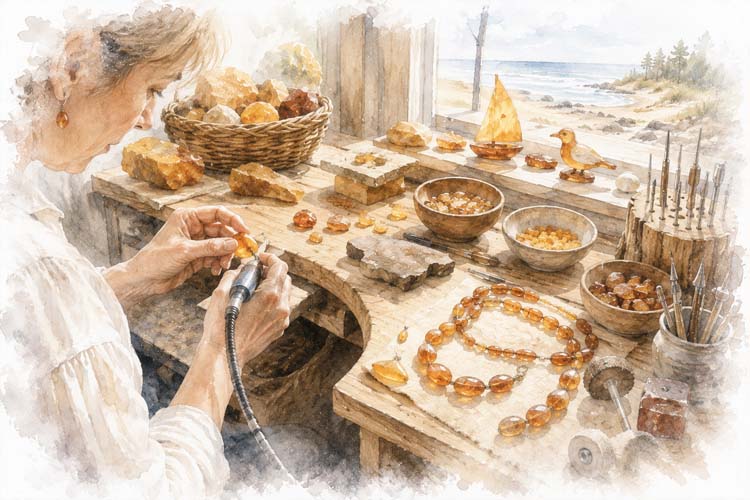
The Lithuanian shore and the Curonian Spit, where amber washes up after storms and has been collected since the Stone Age and carved here since the Neolithic. Palanga holds the Amber Museum and the reference collection; Klaipėda is the port. Working ateliers operate in both. A record should name the maker, state whether the material was storm-gathered on this coast or mined industrially elsewhere on the Baltic, and declare treatment explicitly.
The Curonian Spit
A ninety-kilometre dune peninsula running north from the Russian enclave to Klaipėda, shared between two countries and inscribed by UNESCO, with the sea on one side and a lagoon on the other. It is where much of the storm-gathered amber comes ashore, where the Neolithic workshop material was dredged up, and where the dunes are actively moving and have buried villages within recorded history. The landscape and the material have the same source.
Yantarny and the Industrial Mine
South along the same shore in the Kaliningrad enclave sits the open pit that produces the overwhelming majority of the world's Baltic amber, dug from the blue earth by hydraulic mining rather than gathered after storms. It is the same forty-million-year-old resin and it is not the same provenance, which is exactly why a record should say which of the two a piece came from instead of resting on the word Baltic.
Also on the Map
The Eocene conifer forest that produced the resin around forty million years ago and no longer exists anywhere. The Amber Road, the prehistoric route carrying this coast's only export to Mycenae, Rome and Egypt, which made a marginal shore matter to the ancient Mediterranean. The Neolithic workshop material dredged from the Curonian Spit, thousands of worked pieces establishing that this was a place of carving and not only of collection. And copal, plastic, glass and pressed scrap, the four things most often sold as amber, each identifiable by a test anyone can perform. Maker, source, treatment, and whether it is amber at all: four answers, and this is the only heartland where the last question is the one that most often fails.