Arts, Crafts and Living Ateliers
Weaving on the altiplano is done at altitude, outdoors when the weather allows, on the backstrap loom, and it is thoroughly integrated into the rest of a household's work: herding, spinning while walking, dyeing in batches, weaving in the hours that are left. The aguayo being made this month is frequently for the household rather than for anyone else, which is the clearest difference between this and the craft economies elsewhere in the collection. Most of what is woven here was never intended to be sold to anyone.
Warp-Faced, and Why That Is Hard
Andean weaving is warp-faced: the warp threads are set so densely that they cover the weft completely and the design is constructed by selecting warps rather than by inserting coloured weft. It produces a firm, dense, hard-wearing cloth, which is what a carrying textile needs, and it is considerably more demanding than the weft-faced tapestry a European eye expects. Turn a piece over: on genuine warp-faced work the reverse carries the pattern as a negative, coherent and structural, not as loose floats.
Reading an Aguayo
Look first at the pallay bands, their density, the regularity of the small figures, and whether the patterning holds its scale across the width. Look at the join, since a full-size aguayo is woven as two panels on a narrow loom and sewn together down the centre, and the quality of that seam and the accuracy with which the patterns align across it is a direct measure of skill. Check the four selvedges. And ask the community, because the patterning is regional and the answer exists.
Old, New, and the Question in Between
Age is where this market gets difficult. Genuinely old aguayos exist in quantity because they were made in quantity, and acquiring a worn working textile from a family that no longer needs it is an ordinary transaction. But the same trade routes that moved Coroma's ceremonial weavings still operate. The practical rule is proportionate: for a working cloth, ask where it came from; for anything described as ceremonial, ask who had the authority to release it, and be prepared to walk away from a vague answer.
What an Aguayo Costs Its Weaver
The arithmetic is worth stating because it explains why so many aguayos on the market are machine-made. Fleece is sorted, spun on a drop spindle, dyed, warped, and then woven in two panels at a rate measured in centimetres, and the whole sequence for a good piece runs to months of intermittent work fitted around herding and household labour. Industrially printed acrylic versions of the same patterns are sold across Bolivia for a small fraction of that, and are worn widely, which is nobody's failing but does mean a buyer should establish which they are looking at before discussing price.
Ateliers, Villages and Artisan Encounters
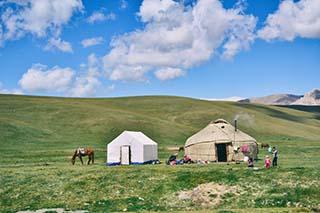
The altiplano communities are spread across a high, cold and sparsely populated landscape, and visiting is a matter of arrangement rather than arrival. La Paz and Oruro are the cities the region trades through, and both hold markets where the full range is visible, from working cloth to pieces made for sale. Oruro in particular is a textile town with a serious carnival, and the two are connected: a festival on that scale sustains a costume trade that in turn sustains weavers, embroiderers and metalworkers through the year.
Tourwit Editions and Provenance
Tourwit works directly with weaving households on the Bolivian altiplano rather than through intermediaries. Artisans are paid before the work begins and retain the major share of what a piece realizes. Editions are limited by what a backstrap loom produces, which is one piece at a time, and each work is documented at source with its community and its weaver. No community ceremonial textile is offered under any circumstances, and no piece is offered whose route out of a community cannot be stated.
Why These Works Matter
An aguayo is one of the few objects in this collection that most people who own one are still using. It is a tool, worn on the back, carrying a child or a load, replaced when it wears out. And the same tradition produced the textiles that a community went to court for five years to recover, on the grounds that they were its history rather than its property. Holding a working cloth from this region means holding the ordinary end of something whose other end a community proved, internationally, that it owned.