

Craft Map
The Craft Map
Two crafts, a few miles apart, both descending from the same temple building programme and answering to different masters: one to scripture, one to a court. Where a Geographical Indication has been granted it recognises exactly this pairing of a technique with a place.
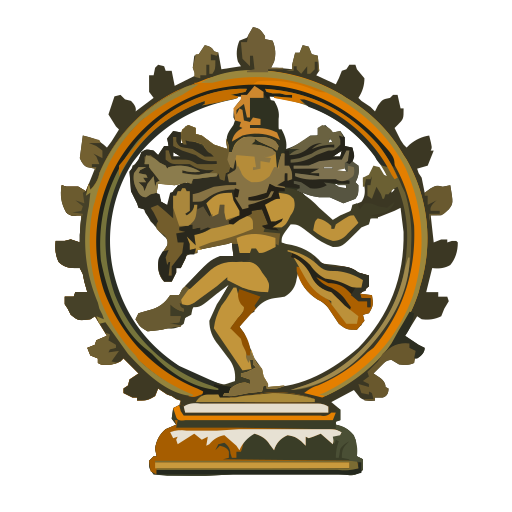
Swamimalai: Chola Bronzes
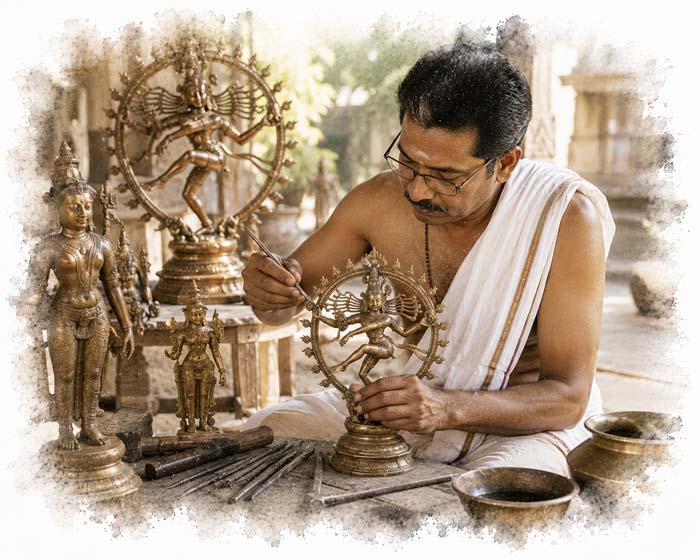
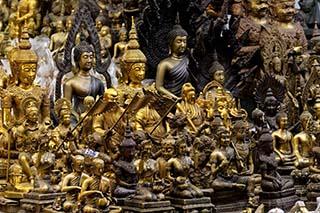
Upriver from Thanjavur on the Kaveri, Swamimalai is where the casters settled after Rajaraja's temple was finished, and the reason they settled is underfoot: the alluvial loam within a few kilometres of the village takes fine detail and does not crack under heat. The sthapathis working it belong to the Vishwakarma communities and have cast for generations, roughly twelve hundred people in the village working in metal today. The tradition has run unbroken from the Chola period, which almost nothing else in Indian metalwork can claim. Swamimalai Bronze Icons took Geographical Indication protection in 2008 and 2009.
Thanjavur: The Painting, and the Bronzes Too
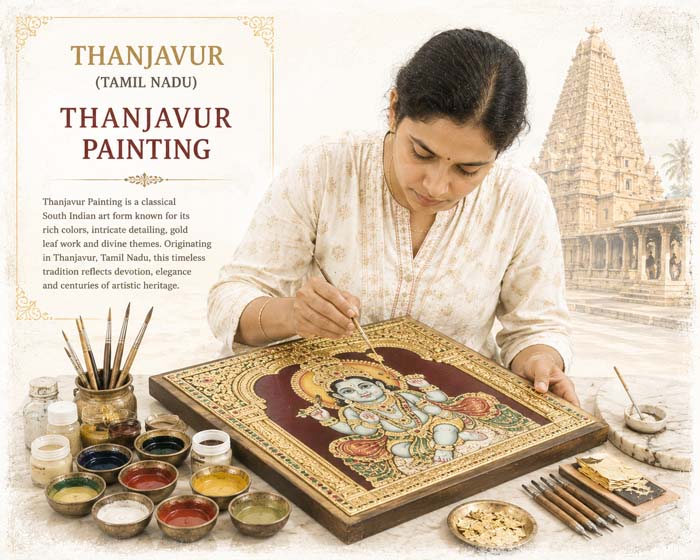
The town itself holds both. Bronze casting is recorded against Thanjavur as well as Swamimalai, and the painting belongs here outright, developed under the Maratha court in the seventeenth and eighteenth centuries and brought to its height under Serfoji II. Gesso relief, gold foil at twenty-two or twenty-four carats and set glass are the identifying construction. Thanjavur Painting holds Geographical Indication protection from 2007 and 2008. A record naming Thanjavur should say which of the two crafts it means, because the town produces both.
Kumbakonam
The temple town downriver, whose twelve-year tank festival sets the widest rhythm in the delta and draws the crowds the bronze and painting trades have always sold into. It carries its own metalworking and a dense concentration of temples, and it is the practical base for reaching the smaller casting villages around Swamimalai rather than a separate tradition of its own.
Darasuram and Gangaikonda Cholapuram
The two later Chola temples inscribed alongside Thanjavur in 2004 as the Great Living Chola Temples, and the reason the phrase is plural. They are where the sculptural vocabulary the bronze casters still work from is most legible in stone, and a caster asked about a posture will frequently point at one of them rather than at a drawing.
Thiruvaiyaru
On the Kaveri a short distance north, where the Carnatic music that accompanies the whole devotional apparatus is kept and where the annual festival for its principal composer is held. It carries no craft in the mapping and belongs on it anyway, because the bronzes were made for a liturgy that this town is where you actually hear.
Also on the Map
The alluvial loam of the Kaveri floodplain, which takes fine detail and survives the heat, and is the physical reason the casters settled where they did. The Vishwakarma communities who hold the casting, and the sthapathi title that goes with it. And the Geographical Indications themselves, granted separately to the bronzes and to the painting, which are the only formal protection either craft has. Which of the two crafts, and then which village: in this delta a record that answers both has placed the object exactly.