


Craft Map
The Craft Map
One craft is recorded here formally and one is not, and the difference is worth stating plainly rather than smoothing over. Where a Geographical Indication has been granted it ties the name to the place; where none exists, the town's own visible practice is doing that work instead.
Kanchipuram: The Silk
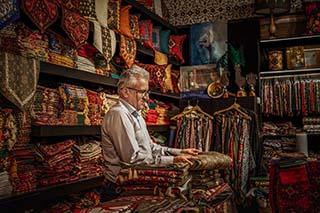
Inland from the coast, about two hours from Chennai, Kanchipuram was the Pallava capital and is a temple city that weaves. The looms are in ordinary houses rather than in a designated quarter, and the cloth is made for temples, for weddings and for the households that keep both. The identifying construction is korvai: body and border woven as separate cloths on one loom by two weavers and interlocked so that the join outlasts the fabric. Kanchipuram silk holds Geographical Indication protection granted in 2005 and 2006, so on this cloth the mark is a thing a buyer can ask for by name.
Mamallapuram: The Stone
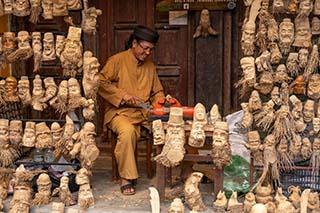
On the coast about two hours south of Chennai, Mamallapuram was the Pallava port, and its seventh and eighth century monuments were cut in place from granite that was already standing: chariot-form temples, cave sanctuaries and an open-air relief on the scale of a cliff face. The trade never left. A government college of traditional architecture and sculpture was founded in the town in 1957, and most of the workshops lining its streets are run by people who trained there. No Geographical Indication attaches to the work leaving them, so what identifies a piece here is the workshop, the training and the stone itself.
Chennai
The city produces neither craft and belongs on the map regardless, because it is the way in to both and the place the December music and dance season is kept, which is the cultural apparatus the silk was woven for and the sculpture serves. It is also where a great deal of Kanchipuram silk is retailed at several removes from the loom, under the town's name, by people who cannot tell you which two weavers made the korvai join.
Also on the Map
The silk-reeling and zari supply the looms depend on, which sits outside the town and sets the ceiling on what a weaver can make. And the Pallava monuments themselves, inscribed by UNESCO in 1984, which are the reason anyone was carving here in the first place. Which town, and then which street: on this corridor those two answers place an object exactly.